We Were Here Tomorrow System Requirements: Windows 11 Only
We Were Here Tomorrow system requirements: Windows 11 only, Ryzen 5 3600, 8 GB of RAM, 25 GB of disk — plus the broadband line co-op makes mandatory.
 Official media · Steam
Quick answer
Minimum: Windows 11, AMD Ryzen 5 3600 or equivalent, 8 GB RAM, GeForce GTX 1660 Ti 6 GB, DirectX 12, broadband internet, 25 GB of disk. Recommended: Ryzen 5 5600X, 16 GB RAM, RTX 3060. There is no macOS or Linux build.
The two tables
Steam publishes both a minimum and a recommended specification, and the gap between them is wider than the price of the game suggests.
| Minimum | Recommended | |
|---|---|---|
| OS | Windows 11 | Windows 11 |
| Processor | AMD Ryzen 5 3600 or equivalent | AMD Ryzen 5 5600X or equivalent |
| Memory | 8 GB RAM | 16 GB RAM |
| Graphics | GeForce GTX 1660 Ti, 6 GB | GeForce RTX 3060 |
| DirectX | 12 | 12 |
| Network | Broadband internet connection | Broadband internet connection |
| Storage | 25 GB | 25 GB |
Two rows are unusual enough to be worth reading twice: the operating system is Windows 11 with no Windows 10 fallback, and the network requirement is listed in both columns rather than as a footnote.
Windows 11 is a hard floor
There is no Windows 10 line in either column. That is rare — most 2026 releases still list Windows 10 as the minimum — and it excludes a large number of otherwise capable machines.
If you are on Windows 10, the game is not supported even if the hardware is well above the recommended tier. The only routes are an upgrade or a different machine, and neither is something a system requirement page can pretend away.
The same applies to the platform list. There is no macOS build and no Linux build, so a Mac or a Steam Deck is not a supported configuration in the way it is for games that ship a native Linux client. The PlayStation 5 and Xbox Series X|S versions are the alternative if the PC floor is the problem, and the release date page has what shipped on each of them.
Why a co-op game lists broadband in both columns
We Were Here Tomorrow is a two-player online co-op game. There is no single-player mode and no offline mode: the second player is the game.
That is why the network line appears twice. A single-player game can list a connection as recommended and still be playable offline; this one cannot start without a second machine on the other end. The requirement is not about downloading the game, it is about the game existing at all.
It also means the bandwidth question is less important than the latency one. The game does not stream video between players; it synchronises positions and puzzle states. A modest connection with low ping is better than a fast connection that routes badly, and the practical test is a voice call: if the call is clear, the puzzle sync will be fine.
The graphics line is doing less than it looks
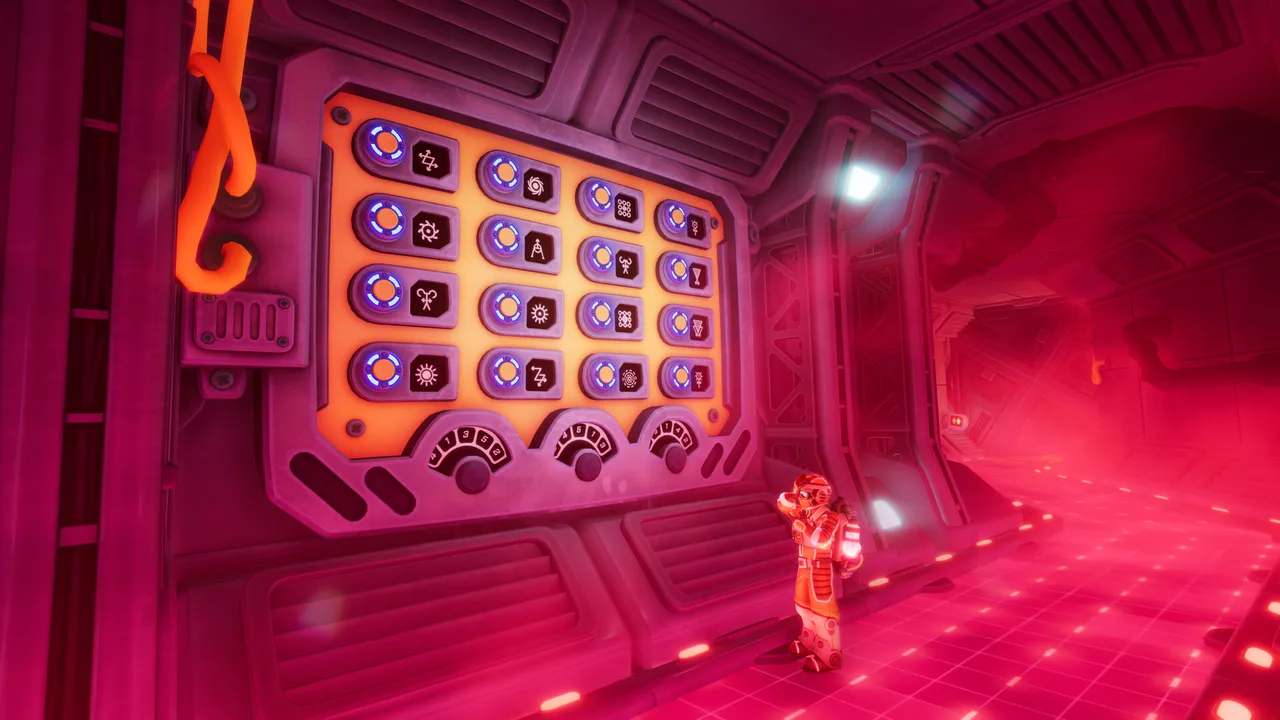
A GTX 1660 Ti at minimum and an RTX 3060 at recommended reads like a demanding renderer. It is more likely a statement about resolution and shadows: the game is a first-person puzzle adventure built around indoor environments and sight lines, not an open world.
Which means the floor is real but the ceiling is soft. A card between the two tiers will run the game, and the setting that matters most is the one that decides how far you can see down a corridor — draw distance and shadow quality, not texture resolution.
If the frame rate dips, the first two things to lower are shadows and anti-aliasing. Both cost more than they return in a game where you spend most of your time looking at a wall and describing it to someone.
 Official media · Steam
Storage: 25 GB in both columns
Twenty-five gigabytes is a mid-size install and the figure does not change between the minimum and recommended tiers, which tells you the assets are fixed rather than scalable.
For a two-player game this matters for a different reason: both players need the install. Two copies of 25 GB on two machines is 50 GB of disk for one evening of play, and that is before the host's capture software or a second game in the same library.
If disk space is tight, the install is also the thing you cannot work around. There is no streaming mode and no partial install.
What the requirements do not tell you
They do not tell you whether the game runs on a laptop with integrated graphics — almost certainly not, given a 6 GB discrete card sits in the minimum column.
They do not tell you the frame rate at 1440p or 4K, because the store lists no resolution targets. What they describe is a machine that can run the game at all, not the machine that runs it best.
And they do not tell you the thing that actually decides whether a session works: whether the other player's machine meets the same bar. A pair is only as playable as its weaker PC, and the co-op design means neither player can carry the session alone.
There is one number the tables leave out that decides more sessions than the GPU does: memory. Eight gigabytes is the floor, and it is the line that a laptop with a capable card and a soldered 8 GB of shared memory fails on, because the game, the voice client and the browser a pair keeps open for a walkthrough all draw from the same pool. Sixteen is the recommended figure for a reason.
Checking your own machine in a minute
On Windows, open the Run dialog and type dxdiag. The System tab gives the OS build and the processor; the Display tab gives the graphics card and its memory. Compare those four numbers against the minimum column before buying.
If the OS line says Windows 10, stop there — nothing else in the table matters until that changes.
For memory, Task Manager's Performance tab shows the installed figure directly, and it is worth checking whether the machine can be upgraded at all: a laptop with soldered memory is fixed at whatever it shipped with.
 Official media · Steam
If it runs badly
The game's own troubleshooting page covers the common failures, and the two most frequent are not hardware problems: a session that fails to connect, and a launch that hangs on a black screen.
Both are worth checking before blaming the machine. A pair that cannot connect has usually not tried the same steps in the same order, and the fix is procedural rather than technical. The not-loading page walks through the order that works.
Requirements FAQ
Does We Were Here Tomorrow run on Windows 10?
Is there a Mac or Linux version?
Can I play it alone?
How much disk space do two players need?
Will a GTX 1660 Ti really run it?
Related guides
We Were Here Tomorrow Steam: Store Page Explained
We Were Here Tomorrow Steam page explained: AppID 2315050, Windows-only requirements, 16 languages, 37 achievements and a Mostly Negative reception.
We Were Here Tomorrow Not Loading: Fixes by Symptom
We Were Here Tomorrow not loading, black screen or silent voice chat: fixes ordered by symptom, each marked as patched in 1.1.2 or still open on Oct 26.
We Were Here Tomorrow Release Date and Unlock Time
The We Were Here Tomorrow release date is October 20, 2026, with PC unlocking at 13:00 UTC. Console timing, the demo window and the discount deadline.
Pick your next page
Every guide links back to the index, and the official links stay one click away.